
How Hexcel is Bringing Advanced Composite Solutions to the Air Force’s Collaborative Combat Aircraft Program
By Matthew Bates, Director, Marketing & Communications, Americas & Global Fibers
In an era where national security depends on speed, innovation, and partnership, Hexcel is at the forefront of a groundbreaking collaboration with A&P Technology, Inc. and Wichita State University’s National Institute for Aviation Research (NIAR). Together, these organizations are developing materials for advanced aircraft structures that redefine what’s possible for the U.S. Air Force’s Collaborative Combat Aircraft (CCA) program and the future of American defense.
The defense industry faces an urgent reality: the need to produce advanced platforms at unprecedented rates and lower costs.
“The challenges around producing platforms at a higher rate and lower cost are pushing innovation,” explained Imad Atallah, VP of Carbon Fibers, Matrix & Reinforcements at Hexcel. “We want to be intentional about collaborating with others who can bring solutions quicker than we can alone, delivering on critical mission profiles.”
By combining Hexcel’s advanced IM7-24K carbon fiber and 1078-1 resin system with A&P’s overbraiding expertise and NIAR’s certification know-how, the team is demonstrating that high-performance aircraft structures can be built at the rates the Air Force demands.
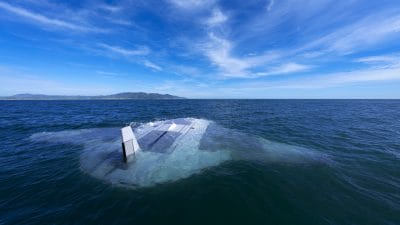
This collaboration is taking flight through development of a serpentine engine inlet duct for the Kratos XQ-58A Valkyrie, a vehicle under evaluation for the Air Force’s CCA program. Hawthorn Composites, a key manufacturing partner, is producing these engine ducts using a carbon fiber and resin-infused overbraid and has already manufactured full-scale wings and fuselages for the Valkyrie using similar methods.
The results are game-changing. According to independent analysis by the Air Force Research Laboratory (AFRL), using braiding and overbraiding techniques can yield a 57% cost savings and a 67% reduction in touch time.

The appearance of U.S. Department of Defense (DoW) visual information does not imply or constitute DoW endorsement
Senior Air Force leaders have made it clear that the future of air combat will rely on collaborative, unmanned systems that can be produced quickly and affordably. “Drones are playing a huge role in how we are going to fight future wars,” said Waruna Seneviratne, Director of the Advanced Technologies Lab for Aerospace Systems (ATLAS) at NIAR. “To meet ultra-high rate demands, government and industry partners must develop new technologies. That’s why we partner with Hexcel and A&P — to demonstrate these technologies at scale.”
The government’s need for industry partners who can deliver at scale has never been more urgent, according to Ben Dietsch, VP of Programs at Hawthorn Composites.
“Our customers are asking us to scale at rates we’ve not heard of before,” said Dietsch. “It’s not typical in aerospace, but we’re committed to making it happen through collaboration and innovation.”
A critical part of this effort is developing a certification framework for overbraided composite structures. The team’s work with the AFRL-funded Modeling for Affordable, Sustainable Components (MASC) program and the FAA is paving the way for these advanced materials to be adopted not just in military, but also commercial platforms.
The overbraided serpentine inlet duct, developed under the MASC program, is a prime example of what’s possible when industry leaders unite around a shared mission.
Hexcel’s role in this partnership is vital, not just for the company, but for the nation.
By pushing the boundaries of what advanced composites can do, and by working with NIAR, A&P Technology, and Hawthorn Composites, Hexcel is helping ensure the U.S. Air Force — and the country — are ready for the security challenges of today and tomorrow.
To learn more about Hexcel’s collaboration with A&P Technology, NIAR, and Hawthorn Composites, watch the video recap from the 2025 Composites & Advanced Materials Expo (CAMX) below: